Integrate medical AI into existing PACS and imaging workflows with a scalable edge platform built for real-time inference, DICOM and non-DICOM data handling, and secure deployment across healthcare environments.
Overview
Medical AI is moving into real clinical deployment, but fragmented imaging systems, workflow disruption, and cloud latency still limit adoption at scale. IEI provides a medical AI platform for real-time inference, PACS and DICOM integration, secure remote access, and scalable edge deployment across hospital departments, clinical environments, and imaging workflows.
Challenges
Fragmented imaging systems, regulatory complexity, cloud latency, and workflow disruption remain the biggest barriers to scalable clinical AI.
DICOM and non-DICOM images spread across multiple systems limit reliable clinical AI deployment.
Complex medical regulations make long-term AI deployment difficult without medical-grade design.
Cloud-centric architectures struggle to meet latency, bandwidth, and security requirements for medical imaging.
Many medical AI solutions disrupt existing PACS workflows, forcing clinicians to change routines and limiting adoption.
Isolated AI pilots without a unified architecture limit scalability across departments.
Solutions
Built with medical-grade security and regulatory readiness, IEI provides a trusted and auditable computing foundation for medical AI.
From medical devices to edge AI platforms, IEI delivers end-to-end healthcare computing expertise to support long-term transformation.
IEI delivers real-time AI inference at the edge, bringing timely clinical insights closer to the point of care while minimizing latency.
IEI solutions natively integrate into existing PACS and DICOM ecosystems, embedding AI seamlessly into clinical workflows.
IEI offers a unified platform that enables scalable management of multiple medical AI applications, supporting growth beyond isolated pilots.
Highlights
For many medical imaging workflows, edge architecture provides faster inference, lower network dependence, and better control over security, compliance, and system integration than cloud-only models.
Contact us
Products
High-resolution medical images are processed in real time at the edge using an AI Box PC equipped with GPU, VPU, or video capture card acceleration and pre-trained AI models. The platform combines real-time video capture with seamless server connectivity, enabling low-latency, high-performance, and secure AI inference within clinical workflows.
 Data Source

DICOM Modalities
(CT / MRI / Endoscopy)
Imaging data input from clinical devices
Hospital PACS Server
Historical or pre-acquired imaging data
 AI Inference Engine
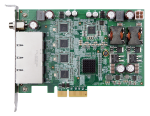
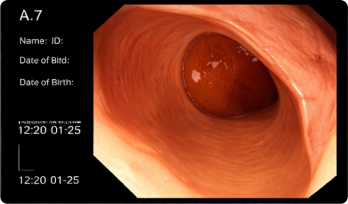
Accelerated by Capture Card、CPU and GPU, enabling real-time AI inference and anomaly detection for medical imaging
 Capture Card
 CPU
CPU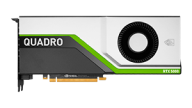 GPU
GPU Inference Results
 Normal
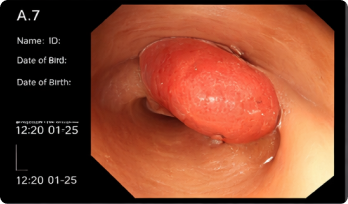
 Abnormal
 Final Step
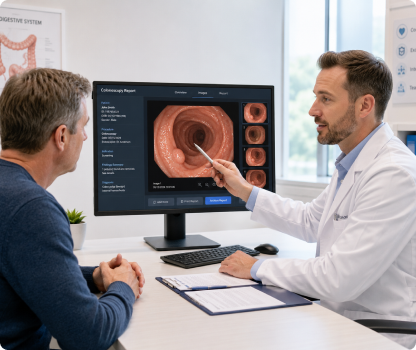
Clinician Review and Report Archiving
Results delivered to clinician for review and archived in PACS.
With an intuitive interface, built-in mini PACS, and a DICOM viewer, clinicians can access AI-assisted imaging workflows within familiar clinical environments. Secure remote access also supports multi-site collaboration, on-call image review, and teleconsultation.
 Data Acquisition
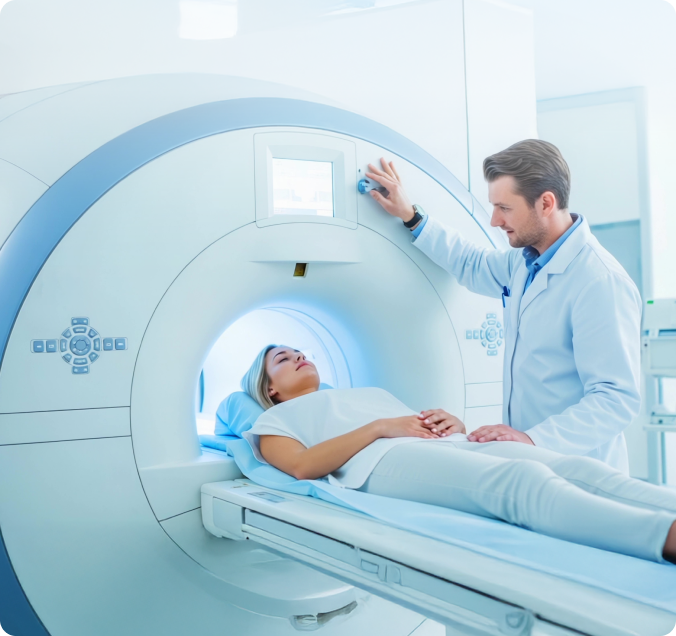
Smart hospital imaging data from CT, MRI, and clinical modalities.
 AI Inference Processing
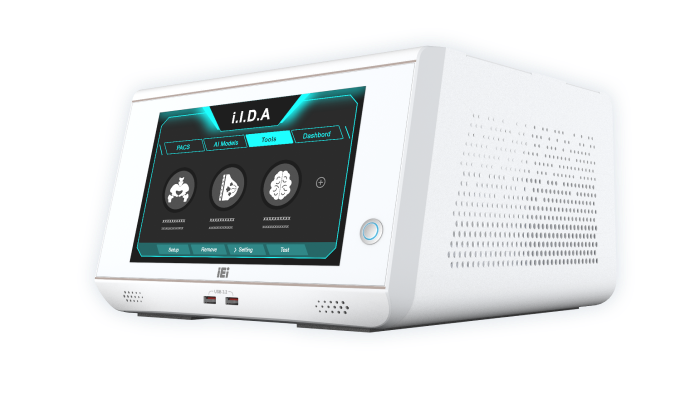
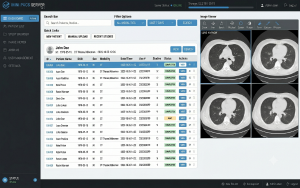 mini PACS Server
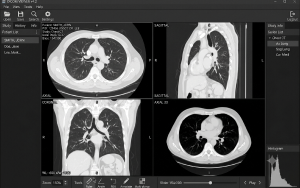 DICOM Image Viewer
 Clinical / Remote Access
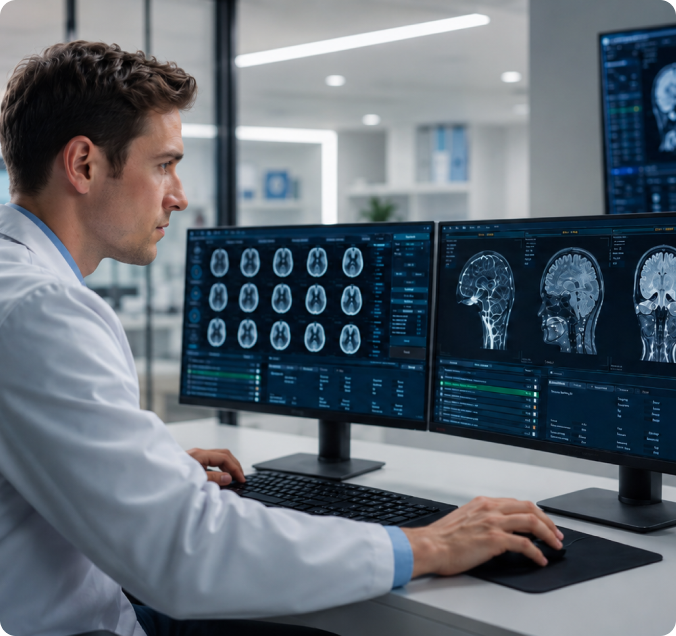
Clinicians access AI-assisted results on-site or remotely for review, collaboration, and teleconsultation.
Application
i.I.D.A (intelligent Imaging Diagnostic Advisor) offers more than 20 medical AI application suites across neurology, thoracic, and gynecology domains, enabling centralized management of multiple models and supporting the transition from isolated pilots to scalable clinical AI deployment.
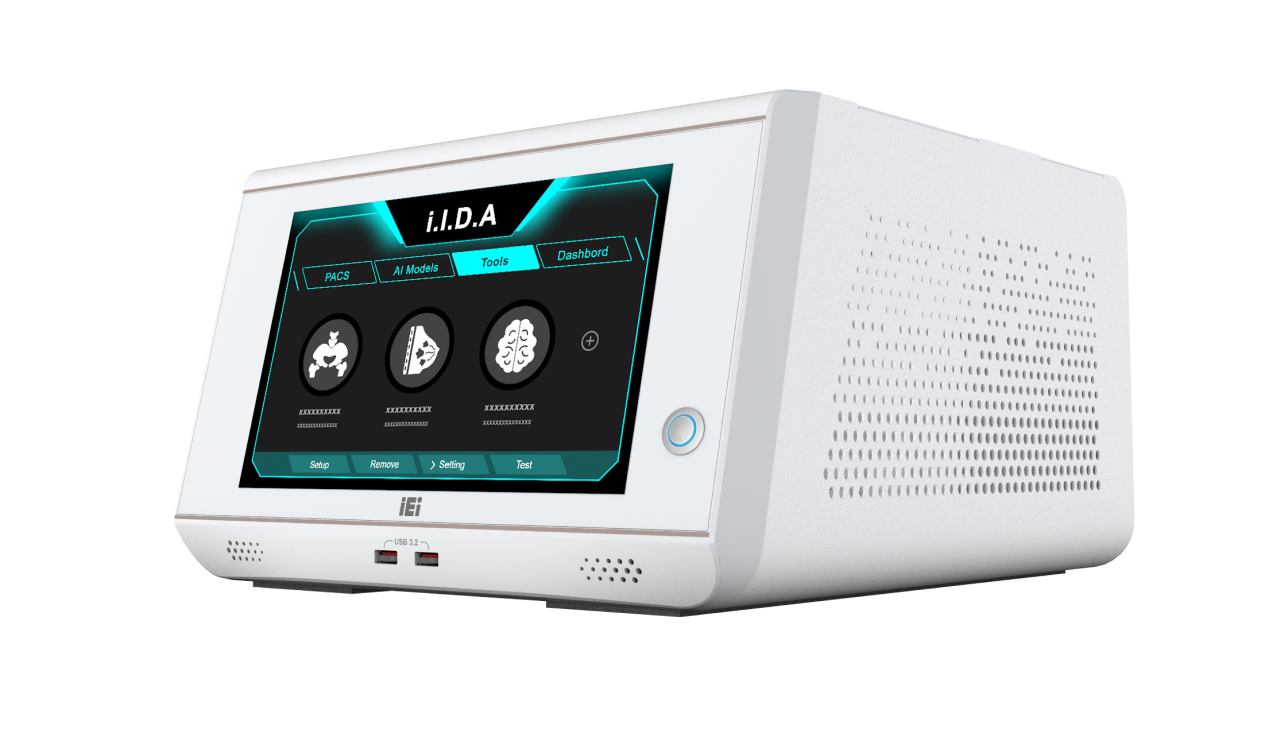

 Intracerebral Hemorrhage DetectionBrain Tumor DetectionMultiple Sclerosis DetectionBrain Volume QuantitationAcute Stroke DetectionMultiple Brain-related Diseases Detection
 Chest X-Ray AIChest X-Ray AI 2Lung Nodule DetectionLung Nodule Detection 2Aortic Dissection AIPulmonary Embolism Detection
 Mammo Lesion DetectionMammo Lesion Detection 2Mammo QC AIBreast Tumor DetectionOvarian Cancer Detection

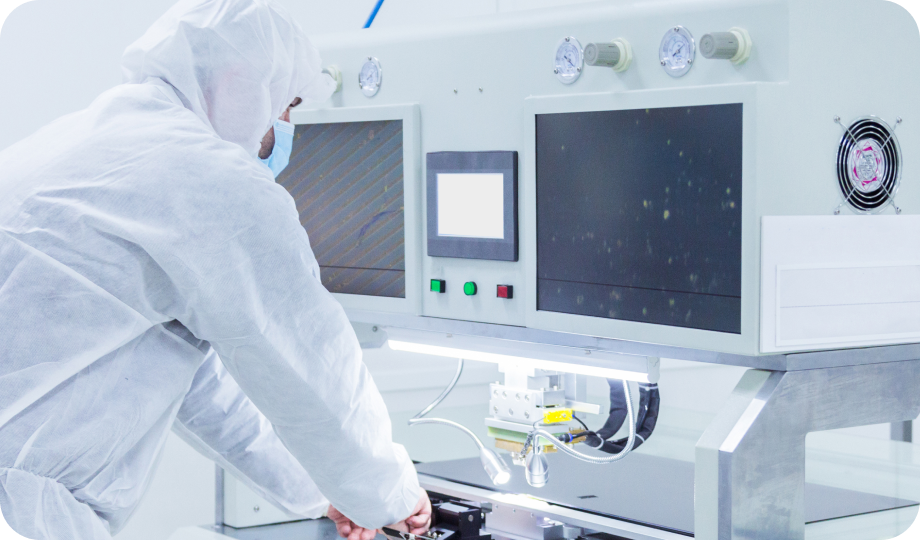
Built on ISO 13485 and TFDA-certified quality systems with IEC 62443-4-1 cybersecurity processes, IEI delivers a trusted, compliant foundation for regulated MedTech solutions. With end-to-end design and long-term product support, IEI helps healthcare partners accelerate digital transformation and deliver safer, data-driven care.
Read More
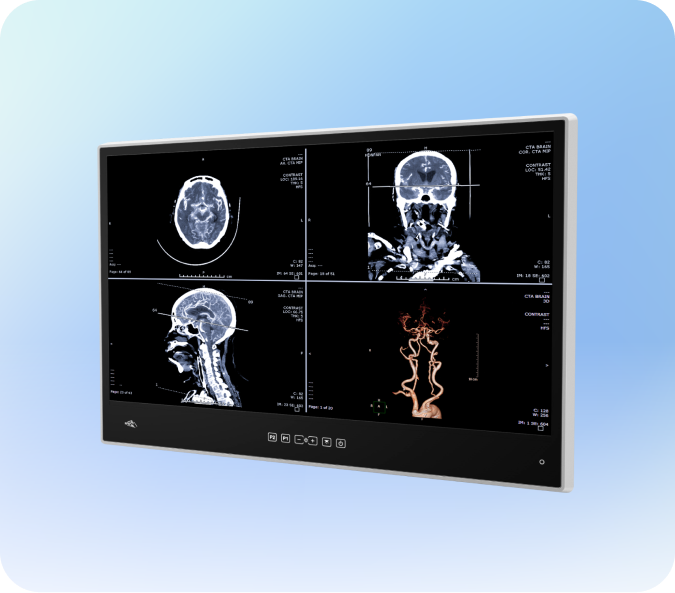
POCi-W24C-RPL
24" Medical Panel PC

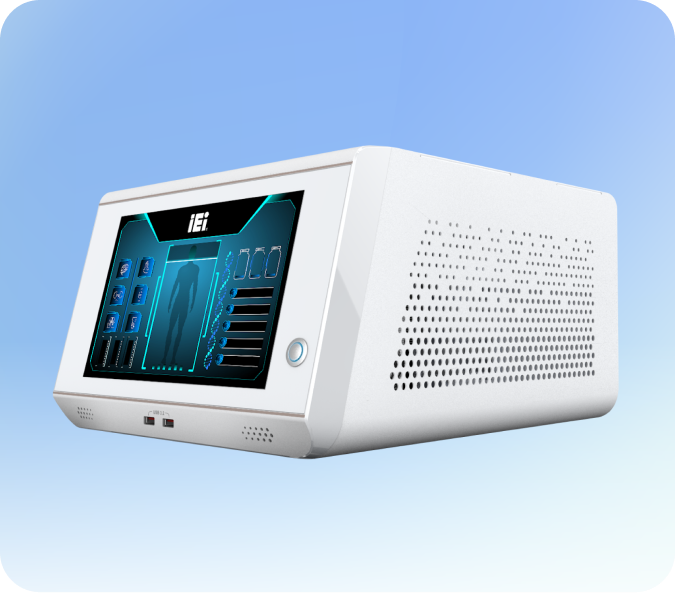
HTB-230D-R680E
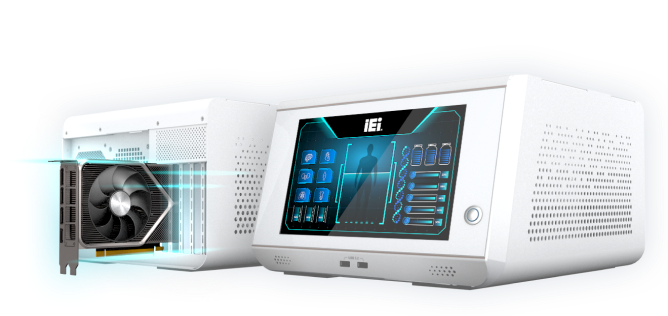
Medical AI / GPU Computing Box PC
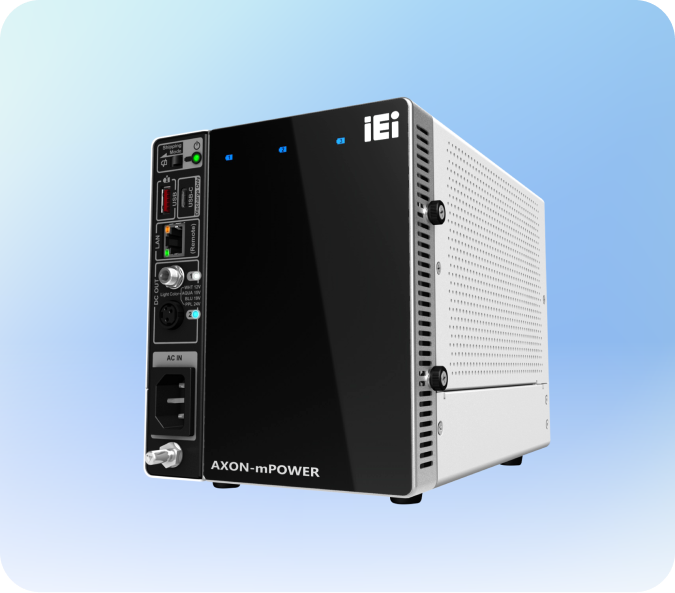
AXON-mPOWER
Medical Grade DC UPS
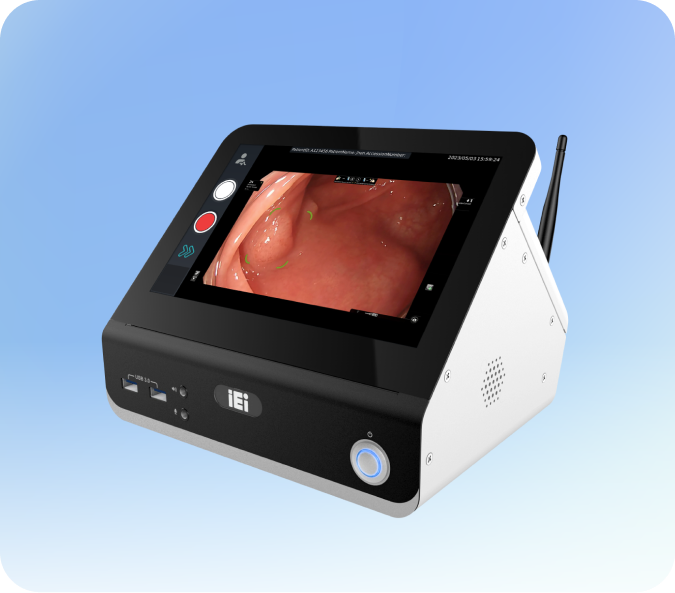
EndoCap-3588
Image Capture & Recording System

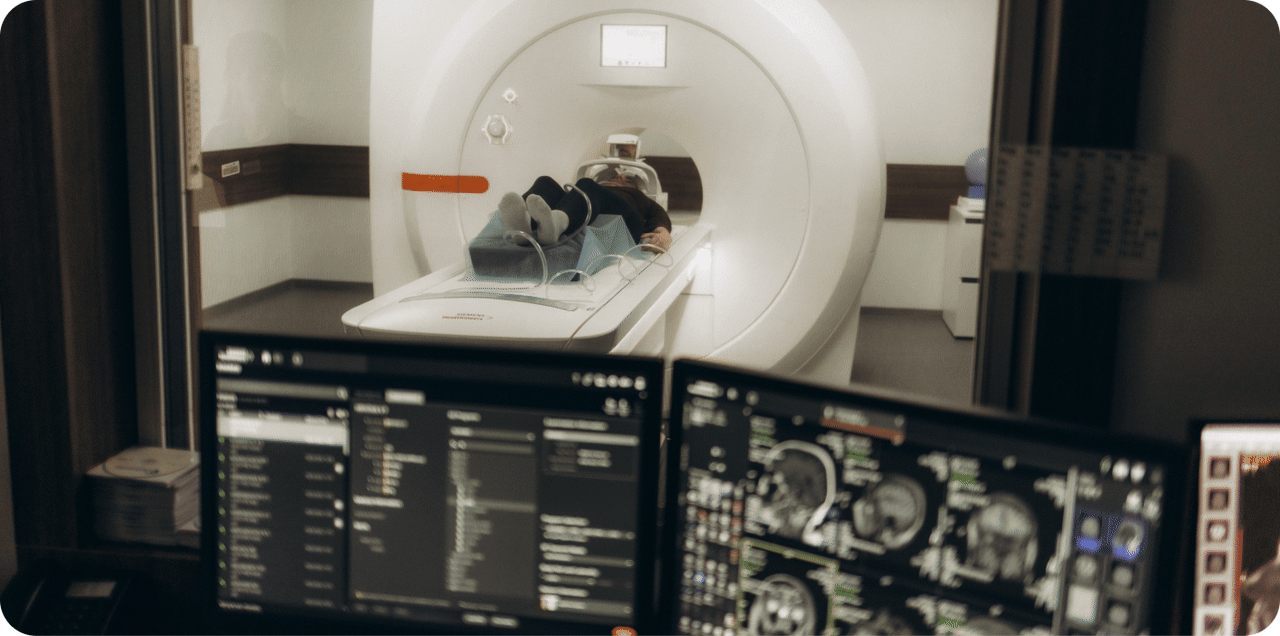
Auto-route PACS studies to AI for pre-screening and flagging to support faster triage of high-risk cases.
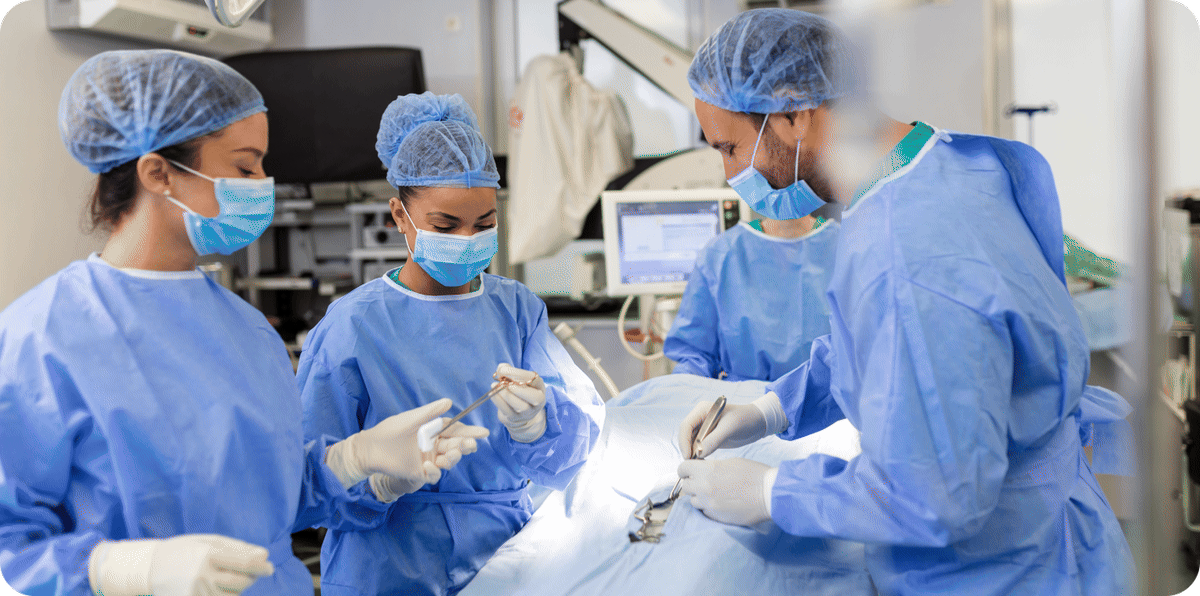
Enable rapid image viewing and AI-assisted insights pre-/intra-op to improve workflow consistency in the OR.
Seamlessly integrate with PACS/DICOM so AI support fits directly into routine reading workflows.
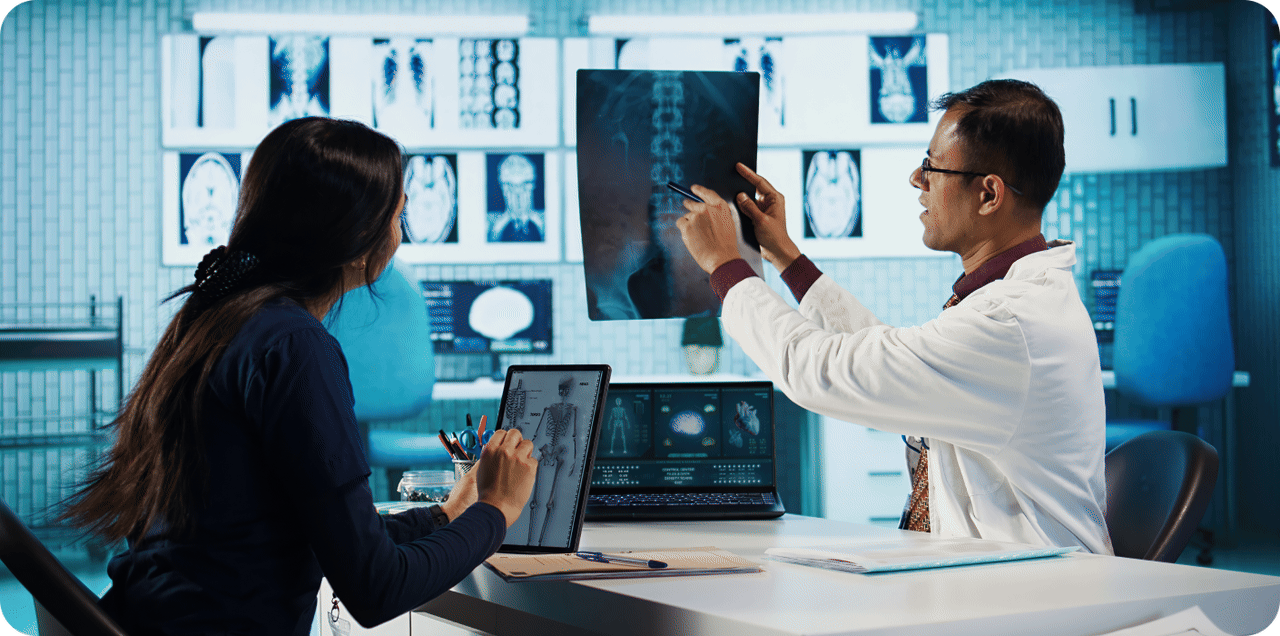
Deploy multi-model AI suites to improve reading consistency and efficiency for specialty imaging.
Medical AI projects often stall after pilot phases because many are developed as isolated proof-of-concept systems rather than as part of a scalable clinical architecture. These deployments may demonstrate model performance, but they often lack integration with PACS environments, do not address long-term regulatory requirements, and rely on infrastructure that is difficult to standardize across departments or sites.
How IEI helps:
IEI provides a medical-grade edge AI platform designed for real clinical deployment from the beginning. By combining edge inference with workflow orchestration through i.I.D.A., IEI helps healthcare organizations move from isolated pilot projects to a repeatable deployment model that can scale across clinical departments, imaging modalities, and hospital locations.
Workflow disruption is one of the main reasons AI adoption slows in clinical environments. When AI systems require separate interfaces, manual image uploads, or parallel review processes, they increase operational complexity and reduce clinician efficiency. For hospitals, successful AI deployment depends on fitting into existing reading workflows rather than forcing new ones.
How IEI helps:
IEI solutions are designed to integrate with existing PACS and DICOM-based workflows. Imaging studies can be routed automatically to AI models, and inference results can be returned to PACS as part of the standard review process. This allows clinicians to continue working within familiar environments while using AI as an embedded decision-support layer.
Medical imaging applications often require low-latency analysis, predictable performance, and strict control over patient data. Cloud-based AI architectures can introduce latency, depend on network conditions, and raise concerns related to bandwidth, data residency, and security. These constraints can limit their suitability for time-sensitive and regulation-intensive clinical environments.
How IEI helps:
IEI deploys AI inference directly on medical-grade edge systems located close to imaging devices and clinical workflows. This edge-based architecture supports faster analysis of high-resolution images while keeping sensitive data within hospital-controlled infrastructure. The result is more responsive AI-assisted imaging without compromising data governance or operational reliability.
Modern healthcare environments often include a mix of DICOM modalities and non-DICOM imaging sources, such as endoscopy, ultrasound, pathology, and other specialty imaging systems. This diversity makes AI deployment more complex because data ingestion, model execution, and result handling may differ across departments and image types.
How IEI helps:
IEI addresses this challenge through i.I.D.A., which acts as a unifying orchestration layer for both DICOM and non-DICOM workflows. It helps manage data flow, model selection, inference execution, and result feedback in a more consistent way, enabling healthcare organizations to build a broader and more manageable AI deployment framework.
Medical AI deployment requires more than algorithm performance. Long-term adoption depends on whether the platform is built with quality processes, documentation discipline, traceability, and cybersecurity practices that align with regulated healthcare environments. Without this foundation, AI projects may face barriers during deployment, validation, or scaling.
How IEI helps:
IEI platforms are developed under medical-grade quality and security processes, including ISO 13485, TFDA-certified quality management systems, and IEC 62443-4-1 cybersecurity development practices. This foundation helps support traceability, audit readiness, and secure system design for clinical deployment.
Hospitals need more than a single AI application. As clinical needs evolve, they often need to deploy additional AI models across different specialties, departments, and sites. If each deployment requires separate hardware, integration work, and management processes, expansion becomes costly and difficult to sustain.
How IEI helps:
IEI provides a unified edge AI platform that supports broader deployment and centralized orchestration through i.I.D.A. This makes it easier to introduce new AI applications over time while maintaining infrastructure consistency, operational control, and deployment efficiency across healthcare environments.
Whether you are evaluating a new medical AI workflow, integrating with PACS and DICOM systems, or planning deployment across multiple clinical environments, the right platform architecture can reduce friction and improve long-term scalability.